
Pan-Seared White Fish with Hasselback Potatoes and Lemon-Garlic Butter Sauce
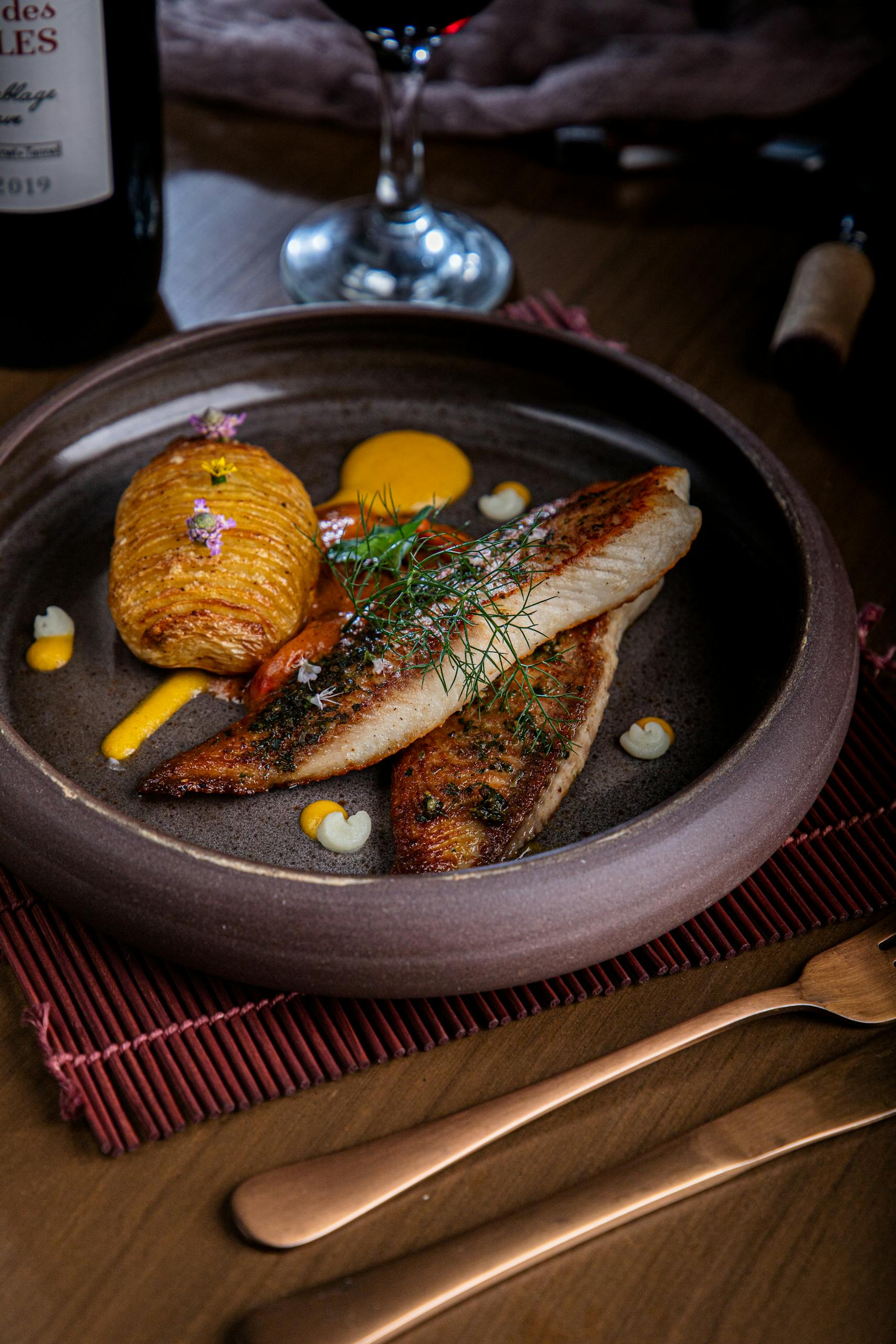
There’s something about a plate of golden fish and crisp, fanned potatoes that feels like a special-occasion dinner. The good news? With a few smart techniques, it’s completely within reach for a weeknight at home.
This recipe walks you through three simple components: pan-seared white fish with a crisp exterior and flaky center, hasselback-style roasted potatoes with crunchy edges, and a sunny lemon-garlic butter sauce that ties it all together.
Choose the Right White Fish
Look for a firm, mild white fish such as cod, haddock, pollock, tilapia, or sea bass. Fresh fillets should smell clean (not overly fishy) and feel firm to the touch. If you’re buying frozen, that’s perfectly fine—just thaw it overnight in the refrigerator, not on the counter.
According to the FDA, seafood should be kept refrigerated at 40°F or below and stored separately from ready-to-eat foods to prevent cross-contamination. Keep it in the coldest part of the fridge and cook within a day or two of purchase.
Ingredients (Serves 4)
- 4 white fish fillets (about 4–6 ounces each)
- 4 medium Yukon Gold or similar potatoes
- Olive oil
- Salt and freshly ground black pepper
- 3 tablespoons butter
- 2 cloves garlic, minced
- Zest and juice of 1 lemon
- Fresh herbs (such as dill or parsley), for garnish
Step 1: Hasselback Potatoes
Heat your oven to 425°F. Scrub and dry the potatoes. To create the hasselback effect, place a potato between two wooden spoons or chopsticks and slice thin cuts across the top, stopping when your knife hits the spoons so you don’t cut all the way through.
Set the potatoes on a baking sheet. Drizzle with olive oil, gently fanning the slices so some oil slips between them. Season generously with salt and pepper.
Roast for 45–60 minutes, depending on size, until the centers are tender and the edges are crisp and golden. About halfway through, brush or spoon a little more oil over the tops to encourage browning.
Step 2: Pan-Sear the Fish
Pat the fish very dry with paper towels—this is the key to a good sear. Season both sides with salt and pepper.
Heat a large skillet over medium-high heat and add a thin layer of olive oil. When the oil shimmers, lay the fillets in the pan, presentation-side down. Press gently with a spatula for the first 20–30 seconds to prevent curling, then leave them alone. Minimal movement helps develop a golden crust.
Cook 3–4 minutes on the first side, depending on thickness. Flip carefully and cook another 2–4 minutes, until the fish flakes easily and reaches an internal temperature of 145°F, the safe minimum for finfish according to FoodSafety.gov.
Transfer to a plate and tent loosely with foil while you make the sauce.
Step 3: Lemon-Garlic Butter Sauce
Reduce the heat to medium. In the same pan, melt the butter. Add the minced garlic and cook for about 30 seconds, just until fragrant. Stir in the lemon zest and juice, scraping up any flavorful browned bits from the pan.
Taste and adjust with a pinch of salt or an extra squeeze of lemon. Spoon the warm sauce over the fish and around the plate. Finish with fresh herbs.
A Lighter or Dairy-Free Option
Swap the butter for olive oil and finish the sauce with lemon and a spoonful of plain Greek yogurt off the heat for a tangy, creamy feel. For a fully dairy-free version, skip the yogurt and add a splash of vegetable broth to loosen the lemon-garlic oil into a light pan sauce.
Serving Ideas
This dish pairs beautifully with simple steamed green beans, sautéed spinach, or a crisp side salad. If you’re serving guests, add a chilled glass of white wine and a basket of crusty bread to soak up the sauce.
Food Safety and Leftovers
Keep raw fish separate from other ingredients and wash hands, knives, and cutting boards after handling it. The FDA recommends refrigerating perishable foods within two hours of cooking (one hour if the room is above 90°F).
Store leftovers in an airtight container in the refrigerator and use within 3 to 4 days. Reheat gently in a low oven (around 275°F) just until warmed through to avoid drying out the fish. The potatoes can be reheated alongside or crisped briefly in a hot skillet.
Money-Saving Tip
Frozen white fish fillets are often more affordable than fresh and are frozen at peak quality. Thaw them overnight in the refrigerator, pat dry, and cook as directed. You can also use smaller, on-sale potatoes for quicker roasting—just reduce the cooking time.
With a few thoughtful techniques—drying the fish, slicing the potatoes evenly, and finishing with a bright sauce—you’ll have a dinner that feels elegant but fits comfortably into everyday cooking.
