
Baked White Fish with Roasted Carrots and Brussels Sprouts
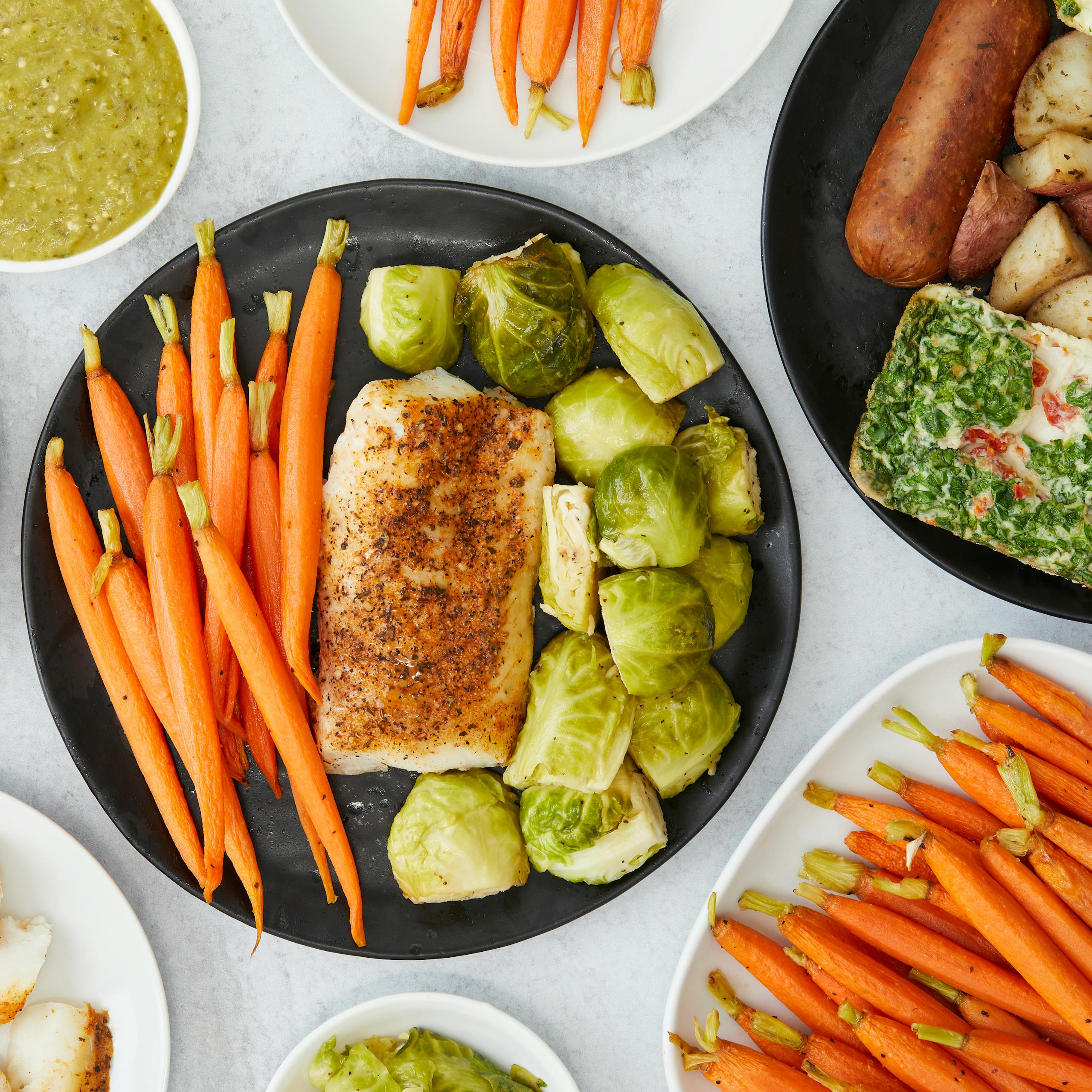
This easy sheet-pan dinner brings together mild baked white fish, sweet roasted carrots, and browned Brussels sprouts for a meal that feels fresh and satisfying without a lot of work. Roast the vegetables first so they get a little color, then add the fish for a short bake until it turns opaque and flakes easily.
Recipe at a glance
- Yield: 4 servings
- Prep time: 15 minutes
- Cook time: 30 minutes
- Total time: 45 minutes
Ingredients
- 1 1/2 pounds carrots, peeled and cut into 2-inch batons
- 1 pound Brussels sprouts, trimmed and halved
- 3 tablespoons olive oil, divided
- 1 teaspoon kosher salt, plus more to taste
- 1/2 teaspoon black pepper, plus more to taste
- 1 teaspoon garlic powder
- 1 teaspoon dried thyme or 1 tablespoon chopped fresh thyme
- 4 mild white fish fillets, about 5 to 6 ounces each
- 1 lemon, half sliced and half cut into wedges
- 2 tablespoons chopped parsley or dill, optional
- 1 tablespoon unsalted butter, melted, optional
Instructions
- Heat the oven to 425 F. Line a large rimmed sheet pan with parchment paper or foil for easy cleanup.
- In a large bowl, toss the carrots and Brussels sprouts with 2 tablespoons of the olive oil, 1 teaspoon salt, 1/2 teaspoon pepper, and the garlic powder and thyme. Spread the vegetables in an even layer on the sheet pan, cut sides down where possible.
- Roast the vegetables for 18 to 20 minutes, stirring once halfway through, until the Brussels sprouts are browned at the edges and the carrots are starting to soften.
- Pat the fish fillets dry with paper towels. Rub them lightly with the remaining 1 tablespoon olive oil and season both sides with a pinch of salt and pepper.
- Move the vegetables to make room on the pan. Nestle the fish among the vegetables and top each fillet with a slice or two of lemon.
- Return the pan to the oven and bake for 8 to 12 minutes, depending on thickness, until the fish is opaque and flakes apart easily with a fork. The vegetables should be tender and caramelized at the edges.
- If you like, drizzle the fish and vegetables with melted butter and finish with chopped parsley or dill. Serve with lemon wedges.
Doneness cues: The carrots should be tender with browned edges, and the Brussels sprouts should look deeply golden in spots. The fish is ready when it turns opaque all the way through and flakes cleanly without looking dry.
Serving ideas: Round out the meal with steamed rice, buttered potatoes, crusty bread, or a simple green salad. A spoonful of plain yogurt mixed with lemon zest and chopped herbs also makes a quick, cool sauce alongside the fish.
Easy variation: Swap the thyme for rosemary or Italian seasoning, or use a little Dijon mustard thinned with olive oil and lemon juice as a quick brush-on for the fish before baking.
Storage notes: Refrigerate leftovers in an airtight container for up to 2 days. Reheat gently in a 300 F oven or toaster oven until warmed through, about 8 to 10 minutes, to help keep the fish from drying out. The vegetables can also be eaten cold or at room temperature in a grain bowl or salad the next day.
