
Glazed German-Style Yeast Donuts with Vanilla and Chocolate Glazes
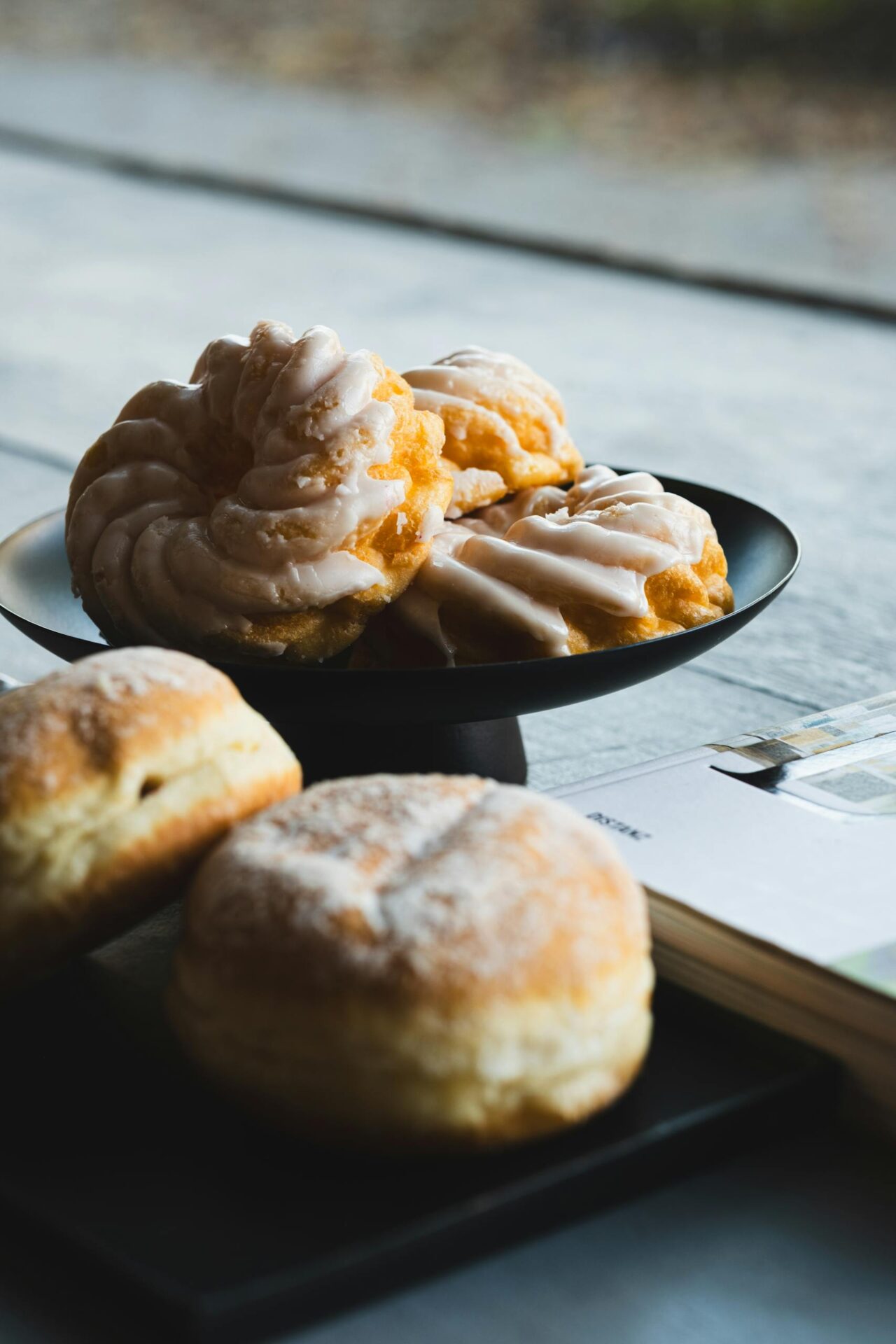
These glazed German-style yeast donuts are tender, soft, and bakery-satisfying—made from scratch with a reliable rise and simple, two-glaze finish. One batch gives you options: a classic vanilla icing glaze and a darker chocolate glaze that tastes like a weekend treat.
Recipe at a glance
- Yield: about 16 donuts (3–3½-inch) plus glaze (or use remaining dough for small donut holes)
- Prep time: 25 minutes
- Rise time: 1 hour 15 minutes (first rise) + optional 20 minutes (second rise)
- Cook/fry time: 10–14 minutes
- Total time: about 2 hours 5 minutes
Ingredients
Yeast donuts
- 2 ¼ tsp (1 packet) active dry yeast
- ¼ cup warm milk (about 100°F to 110°F)
- 2 tbsp granulated sugar
- 3 large eggs
- ½ cup unsalted butter, melted and cooled slightly
- ½ tsp salt
- 1 tsp vanilla extract (optional, for classic sweetness)
- 3 ½ cups (about 490 g) all-purpose flour, plus more for dusting
- Neutral oil, for frying (about 3–4 cups, depending on your pot)
Vanilla glaze
- 1 ½ cups powdered sugar
- 2–3 tbsp milk or heavy cream
- ½ tsp vanilla extract
- Pinch of salt (optional, balances sweetness)
Chocolate glaze
- ¾ cup powdered sugar
- 2 tbsp unsweetened cocoa powder
- 2–3 tbsp milk (or heavy cream)
- ¼ tsp vanilla extract (optional)
- Pinch of salt (optional)
Instructions
- Bloom the yeast: In a bowl, stir yeast, warm milk, and 2 tbsp sugar. Let stand 5–8 minutes until foamy.
- Make the dough: In a large mixing bowl, whisk eggs, melted butter, salt, and vanilla (if using). Add the yeast mixture. Add flour 1 cup at a time, stirring until a shaggy dough forms. Switch to a dough hook (or knead by hand) and knead 6–9 minutes, until smooth and slightly elastic. Dough should feel soft but not pourable; add a little flour only if it’s very sticky.
- First rise: Shape dough into a ball and place in a lightly oiled bowl. Cover and let rise in a warm, draft-free spot until doubled, about 60–75 minutes.
- Shape donuts: Turn dough onto a lightly floured surface and gently pat/roll to about ½-inch thickness. Cut with a 3–3½-inch round cutter. Place on parchment-lined baking sheets. Gather scraps, reroll, and cut again.
- Optional second rise (recommended for extra pillowy texture): Cover and let the cut donuts rise 15–20 minutes while you heat the oil.
- Heat the oil: Pour oil into a heavy pot or Dutch oven to a depth of about 2–3 inches. Heat to 350°F. (Use a thermometer if you have one—stable oil temperature is the key to non-greasy donuts.)
- Fry: Carefully slide 2–3 donuts at a time into the oil. Fry 60–90 seconds per side, until deep golden and the dough springs back when lightly touched. Remove to a wire rack set over paper towels. Repeat with remaining donuts. (Donut holes take less time—start checking at 45–60 seconds.)
- Cool briefly: Let donuts cool 5–10 minutes until warm, not hot. Warm donuts glaze better than hot ones.
- Make vanilla glaze: Whisk powdered sugar, vanilla, pinch of salt (if using), and 2 tbsp milk/cream. Add more liquid 1 tsp at a time until it pours slowly and coats the back of a spoon.
- Glaze vanilla: Dip tops of donuts into the vanilla glaze or spoon over. Let glaze set 10–15 minutes.
- Make chocolate glaze: Whisk powdered sugar, cocoa, pinch of salt (if using), and 2 tbsp milk/cream. Add more liquid until smooth and pourable.
- Glaze chocolate (or do a half-and-half look): Dip or spoon chocolate glaze over tops (or swirl over vanilla after vanilla has set). Let glaze firm up.
Texture/doneness cues
- After proof: dough should look puffy and feel slightly aerated; it shouldn’t spring back completely when pressed.
- After frying: donuts should be deep golden and feel light when you lift them; they should spring back rather than feel doughy.
Tips and variation ideas
- Flavor swap: Add ½–1 tsp ground cinnamon to the dough for a warm, “baked-cake-spice” vibe, or add citrus zest (lemon or orange) to the vanilla glaze.
- Glaze thickness: If glaze runs off too fast, add more powdered sugar. If it’s too thick to spread, add a splash more milk.
- Family-friendly: Let kids sprinkle chopped nuts, rainbow sprinkles, or toasted coconut on right after glazing.
- Safe frying: Keep oil near 350°F. If the oil temperature drops, donuts soak up more oil and can turn pale.
Serving ideas
- Serve warm with coffee, chai, or cold milk.
- For a pastry-board spread, pair with fresh berries or a simple fruit salad.
- Offer both glazes side by side so everyone can choose vanilla, chocolate, or a mix.
Storage notes
- Cool fully first: Donuts should cool until glaze is set before storing.
- Room temperature: Store in an airtight container up to 2 days. (They’ll taste best within the first day.)
- Reheat: For a softer-than-fresh bite, microwave 8–10 seconds. For less stickiness, rewarm in a 300°F oven for 3–5 minutes.
- Refrigeration: Not ideal for long; refrigeration can make fried pastries stale faster. If needed, refrigerate up to 3 days in an airtight container.
- Freezing: Freeze unglazed (or glaze set) donuts in a freezer bag up to 2 months. Thaw at room temperature, then reheat briefly in a 300°F oven before serving.
Optional swap: If you prefer not to use eggs, use 3 “egg replacer” portions (store-bought) for baking; the donuts may be slightly less rich but still tender.
