
Crispy Seafood Cakes with Lemon-Cream Sauce, Rice, and a Simple Side Salad
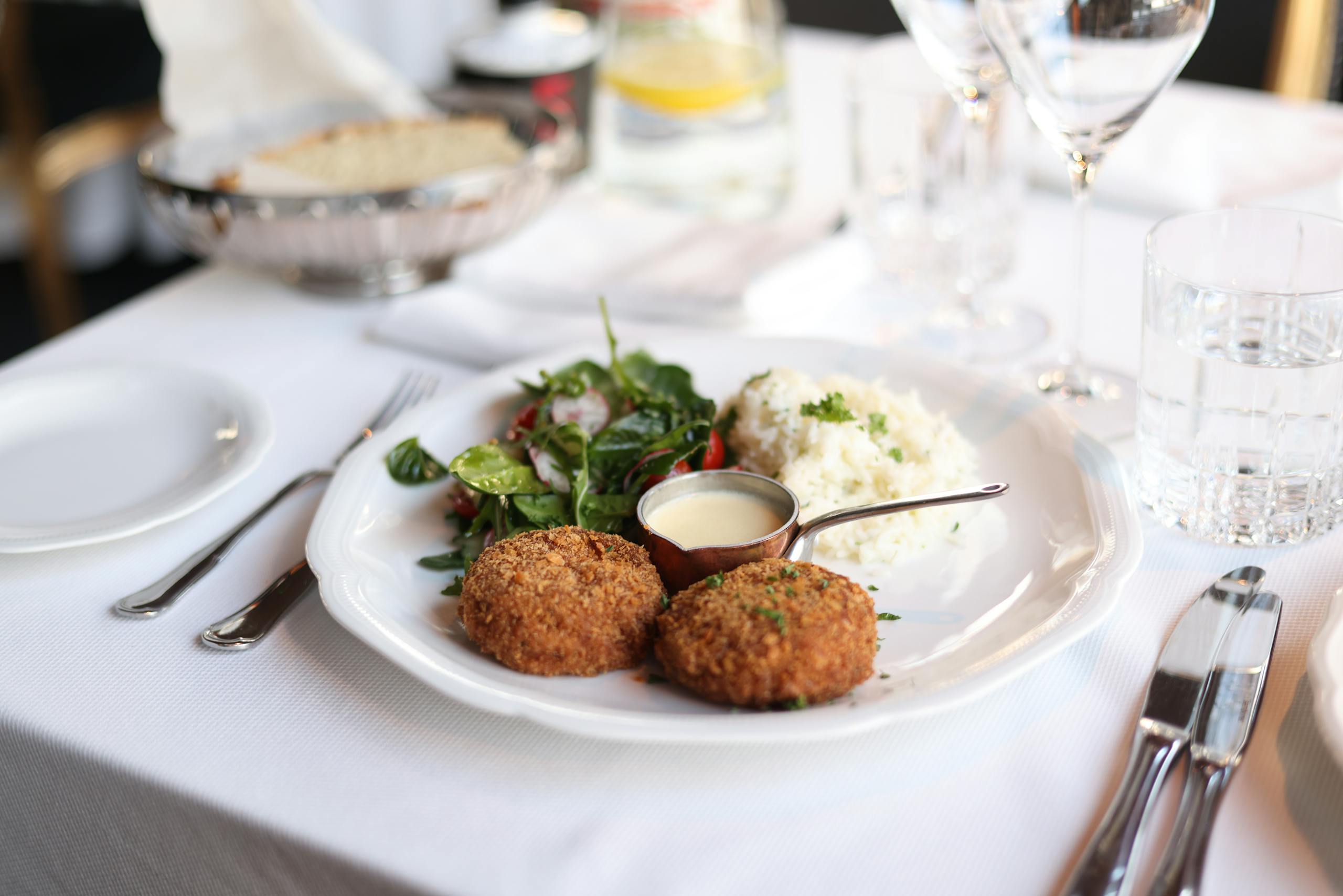
Seafood cakes are one of those dinners that feel a little special without being complicated. A crisp exterior gives way to a tender, flaky center, and when you serve them with simple white rice, a fresh green salad, and a creamy lemon sauce, you’ve got a balanced plate that works just as well for a weeknight as it does for casual entertaining.
The beauty of this recipe is flexibility. Use fresh lump crab if you have it, or swap in cooked flaky white fish, canned salmon, or even tuna. The structure stays the same; the flavor shifts depending on what’s in your fridge.
Choosing and Handling Your Seafood
If you’re starting with fresh seafood, buy it last at the store and keep it cold on the way home. The FDA recommends keeping seafood refrigerated at 40°F or below and using fresh fish within 1 to 2 days for best quality and safety. Store it in the coldest part of your refrigerator until you’re ready to mix your cakes.
When cooking, seafood should reach an internal temperature of 145°F, according to FoodSafety.gov. An instant-read thermometer takes the guesswork out, especially with thicker cakes.
Seafood is also a valuable protein choice, providing nutrients many Americans don’t get enough of, according to Nutrition.gov. That makes these cakes not just delicious, but a practical way to work more seafood into your weekly rotation.
Flexible Seafood Cake Formula
This formula makes about 6 small-to-medium cakes (serves 3–4).
Ingredients
- 1 pound seafood (lump crab, cooked flaky white fish, or well-drained canned salmon or tuna)
- 1 large egg
- 1/3 to 1/2 cup fine breadcrumbs or crushed crackers
- 2 tablespoons mayonnaise or plain Greek yogurt
- 1 teaspoon Dijon mustard (optional)
- 1 to 2 tablespoons finely chopped onion or scallions (optional)
- 1 tablespoon chopped fresh herbs such as parsley (optional)
- Salt and black pepper to taste
- 2 to 3 tablespoons neutral oil for pan-frying
Step 1: Mix Gently
In a large bowl, lightly flake the seafood with a fork, leaving some larger pieces for texture. Add the egg, 1/3 cup breadcrumbs, mayonnaise or yogurt, mustard, and any aromatics. Season lightly with salt and pepper.
Fold everything together just until combined. Overmixing can break down the seafood and make the cakes dense. If the mixture feels too wet to hold its shape, sprinkle in a little more breadcrumb. If it feels dry and crumbly, add a small spoonful of mayo or yogurt.
Step 2: Chill for Structure
Cover and refrigerate the mixture for at least 20 to 30 minutes. This short chill time helps the breadcrumbs hydrate and the cakes hold together when they hit the pan.
Step 3: Shape and Cook
Form the mixture into patties about 3/4-inch thick. Heat oil in a skillet over medium heat. When the oil shimmers, add the cakes without crowding the pan.
Cook for 3 to 4 minutes per side, adjusting the heat as needed so the crust turns deep golden brown without burning. Flip gently using a thin spatula. The cakes are done when heated through and they reach 145°F in the center.
Let them rest on a paper towel–lined plate for a minute or two before serving.
Quick Lemon-Cream Sauce
This simple sauce balances the richness of the cakes.
- 1/2 cup mayonnaise or plain Greek yogurt
- 1 to 2 tablespoons fresh lemon juice
- 1/2 teaspoon lemon zest
- Pinch of salt
- Optional: small spoonful of Dijon or a dash of hot sauce
Stir everything together and taste. Add more lemon for brightness or a pinch of salt to sharpen the flavor. Chill until ready to serve.
Simple White Rice
For a straightforward side, rinse 1 cup of long-grain white rice under cool water until it runs mostly clear (optional, but it helps reduce excess starch). Combine with 2 cups water and a pinch of salt in a saucepan. Bring to a boil, cover, reduce to low, and simmer for about 15 to 18 minutes, or until the water is absorbed.
Let stand, covered, for 5 minutes, then fluff with a fork.
Fresh Green Salad
Toss mixed greens and halved cherry tomatoes with a quick vinaigrette: 2 tablespoons olive oil, 1 tablespoon vinegar or lemon juice, a pinch of salt, and a few grinds of black pepper. The bright acidity cuts through the richness of the seafood cakes and sauce.
Troubleshooting: How to Keep Cakes from Falling Apart
- Too wet: Add more fine crumbs, a tablespoon at a time.
- Too dry: Stir in a small spoonful of mayo or yogurt.
- Breaking in the pan: Chill longer and make sure the pan is fully heated before flipping.
- Sticking: Use enough oil to lightly coat the bottom of the pan and avoid moving the cakes too soon.
Money-Saving Variation
Canned salmon or tuna works beautifully here. Drain it very well and pat dry with paper towels to remove excess moisture. Because it’s already cooked, you’re simply heating it through while building a crisp crust. This option is often more budget-friendly than fresh crab and still delivers great texture.
Storage and Reheating
Refrigerate leftover seafood cakes within 2 hours of cooking in an airtight container. They’ll keep well for up to 3 days.
To reheat, place them in a 350°F oven for about 10 to 12 minutes or warm gently in a skillet over medium-low heat. This helps restore the crust better than microwaving, which can make them soft.
Serve the reheated cakes with extra lemon wedges and a fresh scoop of rice or tucked into a toasted bun with greens for an easy lunch the next day.
With a reliable structure and a few pantry staples, seafood cakes become less of a special-occasion project and more of a regular dinner option—crisp, comforting, and adaptable to whatever seafood you have on hand.
