
Garlic-Rosemary T-Bone Steak with Chili Peppercorn Seasoning
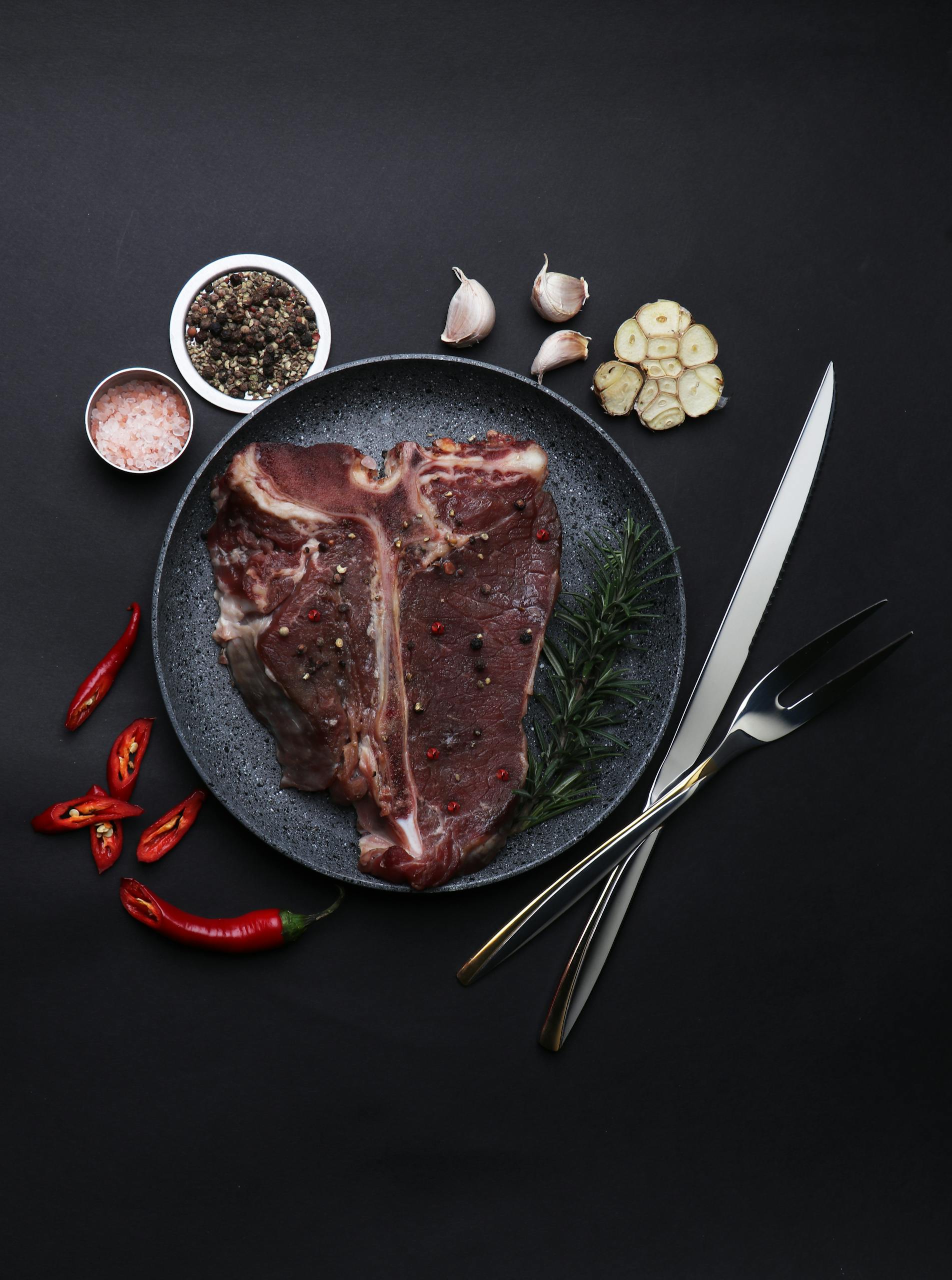
This T-bone steak keeps things straightforward: a coarse seasoning of salt, cracked peppercorns, garlic, rosemary, and chilies gives the beef a punchy crust, while a hot sear locks in flavor. Finish with a brief rest so the juices stay where they belong, then slice and serve with your favorite sides.
Recipe at a glance
Yield: 2 servings
Prep time: 15 minutes
Cook time: 10 to 15 minutes
Total time: 25 to 30 minutes
Ingredients
- 1 large T-bone steak, about 1 1/2 to 2 inches thick, or 2 smaller T-bone steaks
- 1 1/2 teaspoons kosher salt
- 1 teaspoon whole black peppercorns, coarsely crushed
- 1 small dried red chili, finely crushed, or 1/4 teaspoon red pepper flakes
- 2 garlic cloves, minced
- 1 tablespoon finely chopped fresh rosemary
- 1 tablespoon olive oil
- 1 tablespoon unsalted butter, optional
- 2 garlic cloves, lightly smashed, optional for basting
- 1 rosemary sprig, optional for basting
Instructions
- Take the steak out of the refrigerator 20 to 30 minutes before cooking so it loses some chill. Pat it very dry with paper towels.
- In a small bowl, mix the salt, crushed peppercorns, crushed chili, minced garlic, and chopped rosemary. Stir in the olive oil to make a loose seasoning paste.
- Rub the mixture all over the steak, pressing it onto both sides and around the edges. If you have time, let the steak sit for 10 minutes while the skillet heats.
- Heat a heavy cast-iron skillet over medium-high to high heat until it is very hot. If grilling, preheat the grill to high and oil the grates lightly.
- Set the steak in the hot pan or on the grill. Cook without moving it for 3 to 5 minutes on the first side, until a deep brown crust forms. Flip and cook the second side for 3 to 5 minutes more.
- If the steak is thick, use a thermometer to check the center. For a safe minimum, beef steaks should reach 145°F and then rest for 3 minutes, according to USDA FSIS. For a more medium-rare texture, many cooks pull the steak a little earlier and let carryover heat finish the job, but the final internal temperature guidance remains the safest standard.
- For extra flavor, lower the heat slightly during the last minute and add the butter, smashed garlic, and rosemary sprig to the pan. Tilt the pan and spoon the melted butter over the steak for about 30 seconds.
- Transfer the steak to a cutting board and rest for 3 to 5 minutes. The juices will settle, and the meat will slice more cleanly.
- Slice against the grain, separating the strip and tenderloin portions if you like, and serve right away.
Texture and doneness cues
A properly seared T-bone should have a dark, savory crust and a warm center. Press the steak gently with tongs: it should feel firm but still have some give. For the most reliable doneness check, use an instant-read thermometer instead of guessing by color alone. USDA FSIS recommends 145°F with a 3-minute rest for beef steaks.
Serving ideas
Serve this steak with roasted potatoes, a simple green salad, grilled corn, or buttered green beans. For a weekend dinner, add a sharp mustard sauce, sautéed mushrooms, or a wedge of crusty bread to catch the pan juices. For a quicker weeknight plate, pair it with steamed rice and a crisp cucumber salad.
Storage notes
Refrigerate leftover steak within 2 hours in an airtight container. It will keep for 3 to 4 days. Reheat gently in a covered skillet over low heat with a splash of broth, or warm slices briefly in the microwave at reduced power so they do not dry out. Leftover steak is also good cold, sliced thin for salads or steak sandwiches.
Helpful swaps
If you do not have fresh rosemary, use 1 teaspoon dried rosemary, crushed between your fingers before mixing. For less heat, skip the chili and use extra black pepper. If you prefer grilling over pan-searing, keep the same seasoning and cook over high heat with the lid open for a charred exterior and juicy center.
For the best results, keep the steak dry before seasoning, let the pan get properly hot, and use the rest time before serving. Those three steps do most of the work for you.
