
Cozy Potato Curry with Thick, Glossy Japanese-Style Sauce (Roux + Simmer)
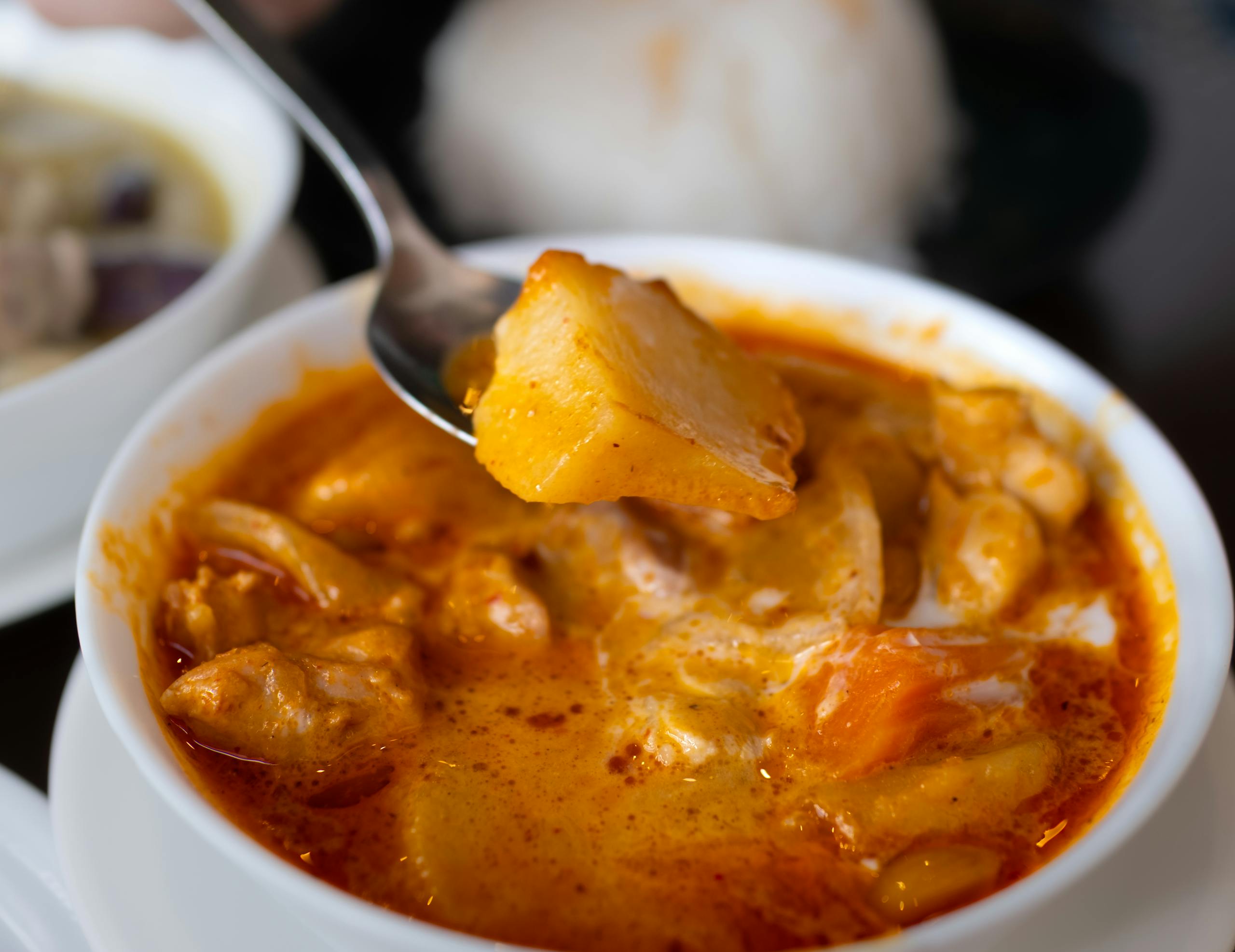
Warm, cozy, and spoon-coating thick—this Japanese-style potato curry gets its body from a roux that you whisk into simmering broth. Potatoes turn silky and tender, and you can keep it vegetarian or add chicken, mushrooms, or extra vegetables.
Recipe at a glance
- Yield: 4 to 6 servings
- Prep time: 15 minutes
- Cook time: 35 minutes
- Total time: about 50 minutes
Ingredients
- 2 medium yellow potatoes (about 1 1/4 lb / 570 g), peeled and cut into 1-inch chunks
- 1 yellow onion, finely diced
- 2 cloves garlic, minced (optional)
- 1 tsp fresh ginger, grated (optional)
- 2 to 3 tbsp neutral oil (such as canola or vegetable)
- 4 cups chicken broth or vegetable broth (32 fl oz / 946 ml), plus more as needed
- 3/4 tsp kosher salt, plus more to taste
- 1/4 tsp black pepper, plus more to taste
- 2/3 cup Japanese curry roux (about 4 to 6 oz / 113 to 170 g; enough to season and thicken—use package directions for your brand)
- 1 tbsp soy sauce (optional; for extra savory depth)
- Optional add-ins:
- 1 lb boneless chicken, cut into bite-size pieces (cook through before simmering with potatoes)
- 1 to 2 cups mushrooms (sliced), added with the onion
- 2 cups carrots or green beans, added to cook until tender
- 1 cup frozen peas, stirred in for the last 2 to 3 minutes
Instructions
- Prep the potatoes. Peel and cut into 1-inch chunks. (Uniform pieces help them cook at the same pace.)
- Sauté the aromatics. In a large pot or Dutch oven, heat the oil over medium heat. Add the onion and cook until softened and lightly golden, 6 to 8 minutes. Stir in garlic and ginger (if using) and cook 30 seconds.
- Add optional add-ins (if using).
- Chicken: Add chicken to the pot and cook, stirring, until no longer pink, about 6 to 8 minutes.
- Mushrooms: Add mushrooms and cook until they release moisture and start to brown, about 5 minutes.
- Carrots: Add now; they’ll simmer alongside potatoes.
- Green beans: Add 15 minutes into simmering (so they don’t overcook).
- Peas: Hold for the end (last 2 to 3 minutes).
- Simmer the potatoes. Pour in the broth. Add salt and pepper. Bring to a gentle boil, then reduce to a steady simmer. Cook until potatoes are fork-tender, about 15 to 20 minutes.
- Thicken with curry roux. Lower the heat to medium-low. Add the curry roux a little at a time, whisking or stirring until it fully dissolves. Simmer gently, stirring often, until the curry turns glossy and spoon-coating, about 3 to 6 minutes.
- Finish and adjust. Stir in soy sauce if using. Taste and adjust salt and pepper. If the curry seems too thick, loosen with a splash of broth; if it’s too thin, simmer 1 to 3 minutes longer.
Texture checklist: Potatoes should be tender enough to mash lightly with the back of a spoon, and the sauce should coat a spoon and leave a slow trail when you draw your finger through it.
Serving ideas: Serve over steamed white rice or jasmine rice. Top with sliced scallions, shredded cabbage, or a spoonful of pickles for brightness. For a kid-friendly option, keep toppings mild and serve curry with a side of shredded cheese (optional) or steamed broccoli.
Quick variations (easy swaps):
- Vegetarian: Use vegetable broth and skip chicken.
- Milder heat: Choose a mild curry roux (many brands label heat levels).
- Extra vegetables: Add diced sweet potato, bell pepper, or zucchini near the end so they stay intact.
Storage notes
Let curry cool slightly, then refrigerate leftovers in a shallow container within 2 hours of cooking. Cooked potatoes are best kept refrigerated for a short window; USDA FSIS notes that cooked potatoes are typically stored safely in the refrigerator for up to 3 to 4 days. Reheat until hot throughout (stirring helps the sauce heat evenly).
Freeze up to 2 months in airtight portions. Thaw in the refrigerator overnight and reheat gently, adding a splash of broth if the sauce thickens as it cools.
For potato handling, it’s also worth remembering safe storage practices: avoid using potatoes that have gone bad, and keep them stored properly to reduce spoilage and unsafe conditions; guidance from the FDA discusses how food storage and preparation practices matter for starchy foods.
