
Spicy Shrimp and Vegetable Stir-Fry (Inspired by a Chili-Laced Plate)
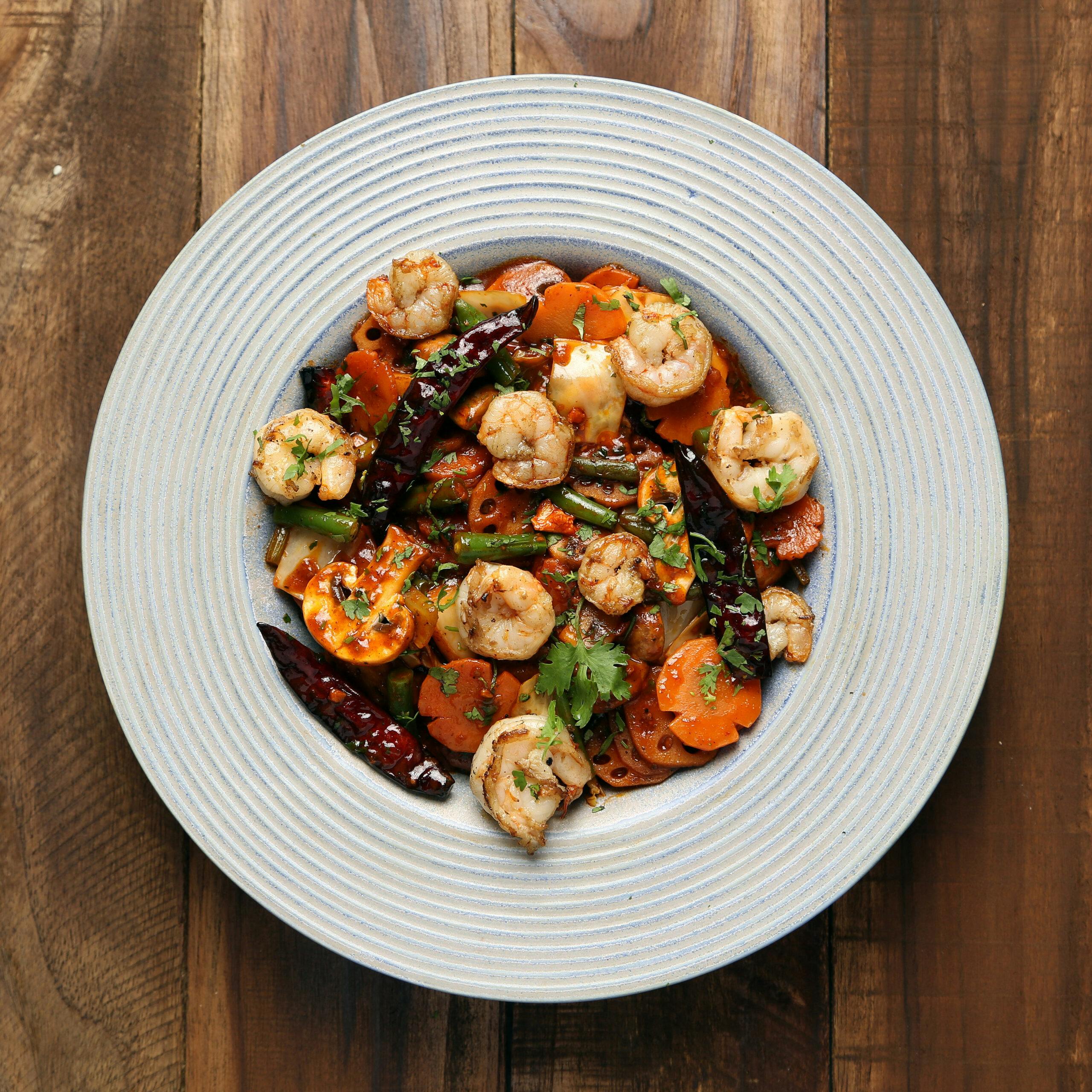
A plate of glossy shrimp tossed with carrots, green beans, and whole dried red chiles is the kind of dinner that wakes up your appetite fast. This spicy shrimp and vegetable stir-fry is inspired by that chili-laced look—bright, bold, and built for a hot pan and a quick cook.
It’s weeknight-friendly, family-adjustable (you control the heat), and grounded in smart seafood safety so you can cook with confidence.
Ingredients
- 1 pound raw shrimp, peeled and deveined (tails on or off)
- 2 medium carrots, thinly sliced on a bias
- 2 cups green beans, trimmed
- 4–8 dried red chiles (whole), depending on heat preference
- 2–3 cloves garlic, minced (optional but recommended)
- 1 teaspoon freshly grated ginger (optional)
- 2–3 tablespoons neutral oil (such as canola or avocado oil)
- 3–4 tablespoons savory stir-fry sauce (for example, a mix of soy sauce and a splash of broth or water)
- Fresh cilantro or other tender herbs, for garnish
- Cooked rice or noodles, for serving
How to Make It
1. Thaw and prep the shrimp safely.
If using frozen shrimp, thaw them in the refrigerator overnight or under cold running water—never on the counter. The FDA’s Safe Steps in Food Handling guidance recommends keeping seafood cold and avoiding room-temperature thawing to reduce bacterial growth. Pat the shrimp dry with paper towels before cooking.
Keep raw shrimp and their juices away from vegetables and other ready-to-eat foods, and wash hands, knives, and cutting boards after contact.
2. Preheat the pan.
Set a large skillet or wok over medium-high to high heat. Let it get properly hot before adding oil. Stir-frying works best when ingredients hit a hot surface and sear quickly rather than steam.
3. Toast the chiles.
Add the oil, then the whole dried red chiles. Stir for 20–30 seconds until fragrant and slightly darkened. This blooms their flavor into the oil.
To control the heat:
- Leave chiles whole for milder heat.
- Snap them in half for more intensity.
- Shake out seeds before cooking for a gentler burn.
4. Stir-fry the vegetables.
Add carrots and green beans. Stir-fry for 3–5 minutes, tossing frequently, until crisp-tender. If using garlic and ginger, add them in the last 30 seconds so they don’t scorch.
5. Cook the shrimp briefly.
Push vegetables to the side and add the shrimp in a single layer. Cook 1–2 minutes per side, just until they turn opaque and lightly firm. Shrimp cook quickly; overcooking is what makes them rubbery.
Seafood should reach a safe minimum internal temperature of 145°F, according to FoodSafety.gov. In practice, that means the shrimp are opaque and no longer translucent in the center.
6. Bring it together.
Stir everything together. Add your stir-fry sauce and toss for another minute until lightly glazed. Remove from heat and scatter with fresh cilantro.
Serving Ideas
- Steamed jasmine or brown rice: A classic base that absorbs the chili-spiked sauce.
- Rice noodles: Toss the stir-fry directly with cooked noodles for a one-bowl meal.
- Lettuce cups: Spoon the mixture into crisp lettuce leaves for a lighter option.
- Family-style platter: Serve alongside simple cucumber slices or a mild slaw to balance the heat.
If cooking for kids or spice-sensitive diners, keep some of the toasted chiles on the side and let adults add extra heat at the table.
Storage Tips
Refrigerate leftovers promptly in shallow containers. The FDA recommends chilling perishable foods within two hours (one hour if the room is very warm). Properly stored, cooked shrimp dishes are generally best within 3–4 days.
Reheat leftovers to 165°F before serving. A quick turn in a hot skillet works better than a long microwave cycle, which can toughen the shrimp.
Money-Saving Tip
Frozen shrimp and frozen vegetable blends can make this dish more budget-friendly—and just as practical. Thaw shrimp safely in the refrigerator or under cold running water, then pat them very dry. If using frozen vegetables, cook them straight from frozen in a very hot pan and avoid crowding. Excess moisture is the enemy of a good stir-fry; high heat helps evaporate it quickly instead of steaming your dinner.
This kind of chili-forward stir-fry reflects a broader American appetite for bold, globally inspired flavors, a trend the National Restaurant Association has highlighted in recent industry research. The good news for home cooks: you don’t need a restaurant kitchen to make it happen. Just a hot pan, a handful of dried chiles, and the confidence to cook shrimp quickly—and safely.
