
Grilled Steak with Roasted Asparagus
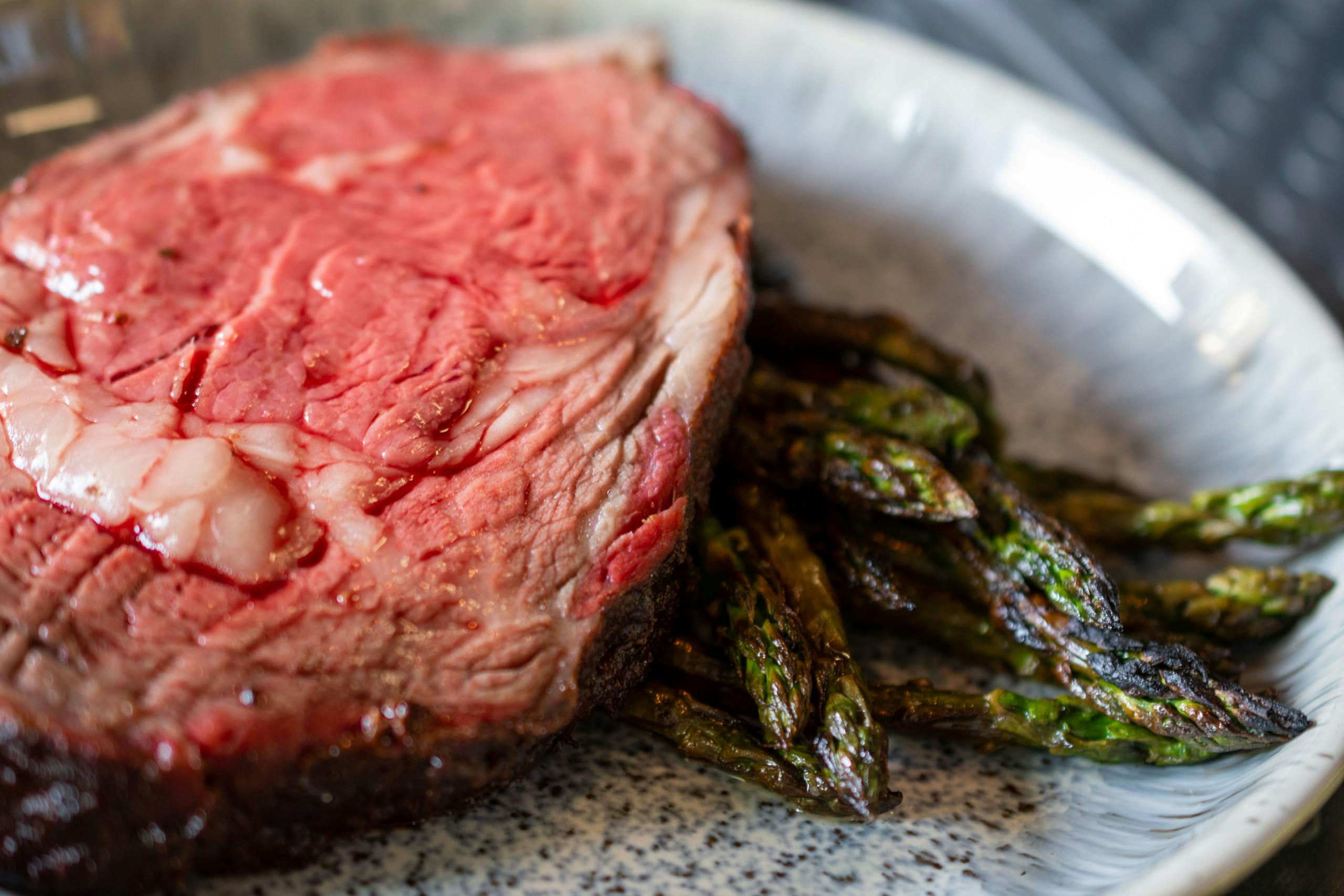
Steak and asparagus make an easy, satisfying dinner when you keep the method straightforward: season well, cook the steak hot, and roast the asparagus until tender-crisp with a little browning at the tips. This version uses a versatile strip steak, but ribeye, sirloin, or flat iron all work with the same timing guide.
Recipe at a glance
- Yield: 4 servings
- Prep time: 15 minutes
- Cook time: 20 minutes
- Total time: 35 minutes
Ingredients
- 1 1/2 pounds strip steak, about 1-inch thick
- 1 pound asparagus, woody ends trimmed
- 2 tablespoons olive oil, divided
- 1 1/2 teaspoons kosher salt, divided
- 1 teaspoon freshly ground black pepper, divided
- 1 teaspoon garlic powder
- 1 tablespoon unsalted butter
- 1 small garlic clove, finely grated or minced
- 1 teaspoon lemon juice
- Optional: pinch of red pepper flakes
Instructions
- Prep the oven and vegetables: Heat the oven to 425°F. Line a sheet pan with parchment or foil for easy cleanup. Toss the asparagus with 1 tablespoon olive oil, 1/2 teaspoon salt, and 1/4 teaspoon black pepper. Spread it into a single layer.
- Season the steak: Pat the steak dry with paper towels. Rub it with the remaining 1 tablespoon olive oil, then season all over with the remaining 1 teaspoon salt, 3/4 teaspoon black pepper, and the garlic powder. Let it sit at room temperature while the oven heats, about 10 minutes.
- Roast the asparagus: Place the sheet pan in the oven and roast the asparagus for 10 to 12 minutes, until the spears are bright green, lightly browned in spots, and just tender when pierced with a fork. Thin spears may be done a minute or two sooner.
- Heat the grill: While the asparagus roasts, preheat a gas grill or grill pan to medium-high heat, about 450°F if you use a thermometer. Clean and oil the grates well.
- Grill the steak: Cook the steak for 4 to 5 minutes per side for medium-rare, or 5 to 6 minutes per side for medium, depending on thickness. For the best results, use an instant-read thermometer and pull the steak when it reaches 125°F to 130°F for medium-rare or 135°F to 140°F for medium.
- Rest the steak: Transfer the steak to a cutting board and let it rest for 5 to 10 minutes. The juices will settle, and the center will finish rising a few degrees while it rests.
- Make the quick finishing butter: In a small pan or microwave-safe bowl, melt the butter with the garlic, lemon juice, and red pepper flakes if using. Spoon it over the warm steak just before serving.
- Serve: Slice the steak against the grain and plate it with the roasted asparagus. Spoon any remaining butter over the top.
Doneness cues
For medium-rare, the steak should feel springy but still soft in the center and slice to a warm pink middle. For medium, the center will be slightly firmer with a deeper rosy color. If you prefer to grill by touch, compare it to the feel of the fleshy part at the base of your thumb: medium-rare feels softer, while medium has a bit more resistance.
Serving ideas
This dinner is especially good with mashed potatoes, buttered rice, roasted baby potatoes, or crusty bread for soaking up the lemon-garlic butter. A simple green salad or cherry tomatoes on the side keeps the meal fresh and balanced.
Easy variations and substitutions
If you do not want to grill, sear the steak in a heavy skillet over medium-high heat for the same timing, then finish it in the oven if needed. You can also swap the finishing butter for a quick pan sauce by adding a splash of beef broth to the skillet, scraping up the browned bits, and stirring in a small knob of butter at the end. For the vegetables, try broccolini or green beans if asparagus is not available.
Storage notes
Store leftover steak and asparagus in separate airtight containers in the refrigerator for up to 3 days. Reheat the steak gently in a low oven or in a covered skillet over low heat so it does not dry out. Asparagus reheats best in a skillet for just a minute or two, or it can be eaten cold in a salad or grain bowl. If you plan to save leftovers, slice only what you need at the table and keep the rest of the steak whole for better texture.
FoodData Central from the USDA is a helpful reference for ingredient context, and Nutrition.gov has practical vegetable-side ideas that work well with simple seasonal produce like asparagus.
