
Buttery Homemade Croissants (Golden, Flaky Layers): A Practical Lamination Method
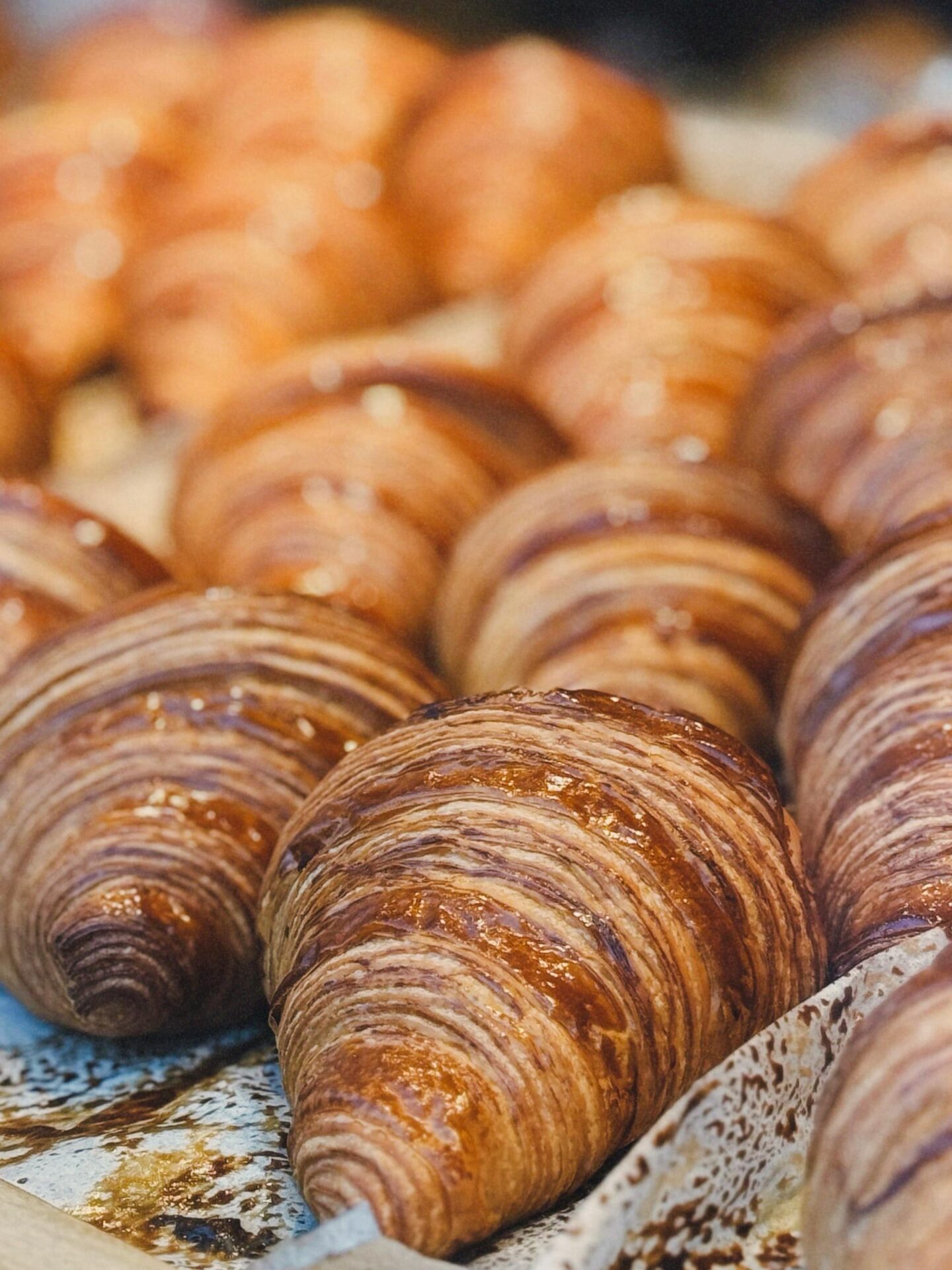
There’s something uniquely satisfying about pulling a tray of croissants from the oven—shatter-crisp outside, tender layers inside, and a deep golden color that looks bakery-worthy. This lamination method is built for home kitchens: you’ll learn how to keep your butter pliable, build strong layers with turns and rests, and bake until the tops are truly golden.
Recipe at a glance
- Yield: 12 croissants (about 3–3½ oz each)
- Prep time: 30 minutes (active), plus chilling
- Cook/Bake time: 18–22 minutes
- Chill/Rest/Proof time: about 8–16 hours total
- Total time: about 10–18 hours (depending on scheduling)
Ingredients
Dough
- 2 ¼ teaspoons (1 packet) instant yeast
- 3 tablespoons granulated sugar
- 1 ½ teaspoons fine salt
- ¾ cup (180g) whole milk, cold
- ¾ cup (180g) water, cold
- 1 large egg
- 4 cups (480g) all-purpose flour
- 2 tablespoons unsalted butter, softened (for the dough)
Butter block (lamination)
- 1 ¼ cups (284g) unsalted butter, cold
- 1 tablespoon all-purpose flour (optional, helps prevent tearing)
Egg wash + finishing
- 1 large egg, beaten
- 1 tablespoon water or milk
- Pinch of salt (optional)
- Optional: 1–2 teaspoons granulated sugar for sparkle
Variation: Swap up to 2 tablespoons of the flour in the dough for bread flour if you want a slightly chewier bite.
Instructions
- Mix the dough: In a large bowl (or stand mixer), combine yeast, sugar, salt, cold milk, cold water, and the egg. Add flour and the 2 tablespoons softened butter. Mix until you have a shaggy dough, then knead until smooth and elastic, about 8–10 minutes by hand or 6–8 minutes in a mixer. Shape into a rectangle, cover, and chill 1 hour.
- Prepare the butter block: While the dough chills, place cold butter on a piece of parchment. Using a rolling pin, gently pound and roll into a 7–8 inch (18–20 cm) square. If using, dust with the optional 1 tablespoon flour and lightly press it in. Wrap and refrigerate until firm but pliable—think: cool modeling clay, not hard like a brick.
- Roll and “envelope” the dough: Lightly flour your surface. Roll the chilled dough into about an 8–10 inch (20–25 cm) square. Unwrap the butter and place it in the center. Fold dough corners over the butter like closing an envelope. Pinch seams to seal.
- Turn 1: Roll the dough gently into a 10–12 inch rectangle without forcing the butter to leak. Fold it into thirds like a letter. Wrap and refrigerate 30 minutes.
- Turn 2: Rotate the dough 90 degrees (so the folds face differently), roll again into a rectangle, and fold into thirds. Wrap and refrigerate 30 minutes.
- Turn 3 (optional but classic for more layers): Repeat one more time: roll and fold into thirds. Refrigerate 30 minutes.
- Roll for shaping: Roll the laminated dough to about 10–11 inches wide and ~¼ inch thick (try to keep edges even). Trim so you have a neat rectangle. Cut into triangles: you should get 12 pieces. Keep the points intact; stretching the tips makes lopsided layering.
- Shape the croissants: Working one triangle at a time, gently stretch the base slightly, then roll from the wide end toward the tip. Place on a parchment-lined baking sheet, curve gently into a crescent. Leave space between croissants so they can expand without merging.
- Proof: Cover loosely and let rise at room temperature until puffy and visibly increased in size, about 1–2 hours, depending on your kitchen. Doneness cue: when you lightly press a croissant, it should spring back slowly and feel aerated, not dense.
- Egg wash: Brush gently with egg wash. (Go light—heavy brushing can drag layers and deflate rise.)
- Bake: Heat oven to 425°F (220°C). Bake 18–22 minutes, rotating once if your oven browns unevenly. Texture cue: tops should be deep golden and feel crisp at the edges; the croissant should sound hollow when tapped lightly on the side.
- Cool: Cool on the tray for 5 minutes, then transfer to a rack. Croissants are delicate right after baking—cooling helps the layers set.
Tips for lamination success
- Butter temperature matters: If the butter smears or seeps through the dough while rolling, wrap and chill 15–20 minutes, then continue.
- Don’t over-flour: Too much flour can interfere with sealing and make layers slide. A light dusting is enough.
- Cold rest prevents butter blowouts: The short refrigeration between turns is part of the structure. Don’t skip it.
Serving ideas
- Breakfast or brunch: Serve with jam, honey, fresh fruit, or scrambled eggs.
- Light meal: Split and fill with ham and cheese, or use as the “bread” for a simple croissant-style sandwich.
- Dessert twist: Warm slightly, then dust with powdered sugar or serve with berries and whipped cream.
Storage notes
- Same-day: Best within 6–8 hours for maximum crispness.
- Room temperature: Store in a breathable bag or loosely covered at cool room temperature for up to 1 day.
- Reheating: For crispness, rewarm at 350°F (175°C) for 5–7 minutes (straight from room temp). Avoid microwaving if you want flakiness.
- Freezing baked croissants: Cool completely, freeze on a tray, then transfer to a freezer bag. Freeze up to 2 months. Reheat at 350°F (175°C) for 10–14 minutes until crisp.
- Freezing unbaked (optional): After shaping and before proofing, freeze on a tray until firm, then bag. Thaw overnight in the fridge, bring to room temp, proof, egg wash, and bake.
Make-ahead scheduling (simple): You can refrigerate the shaped, unbaked croissants overnight after proofing only slightly (they’ll continue rising in the oven’s warmth). If you prefer more control, proof in the morning and bake later that day.
