
Elegant Pan-Seared Salmon with Carrot-or-Squash Puree, Greens, and Quick Herb Oil
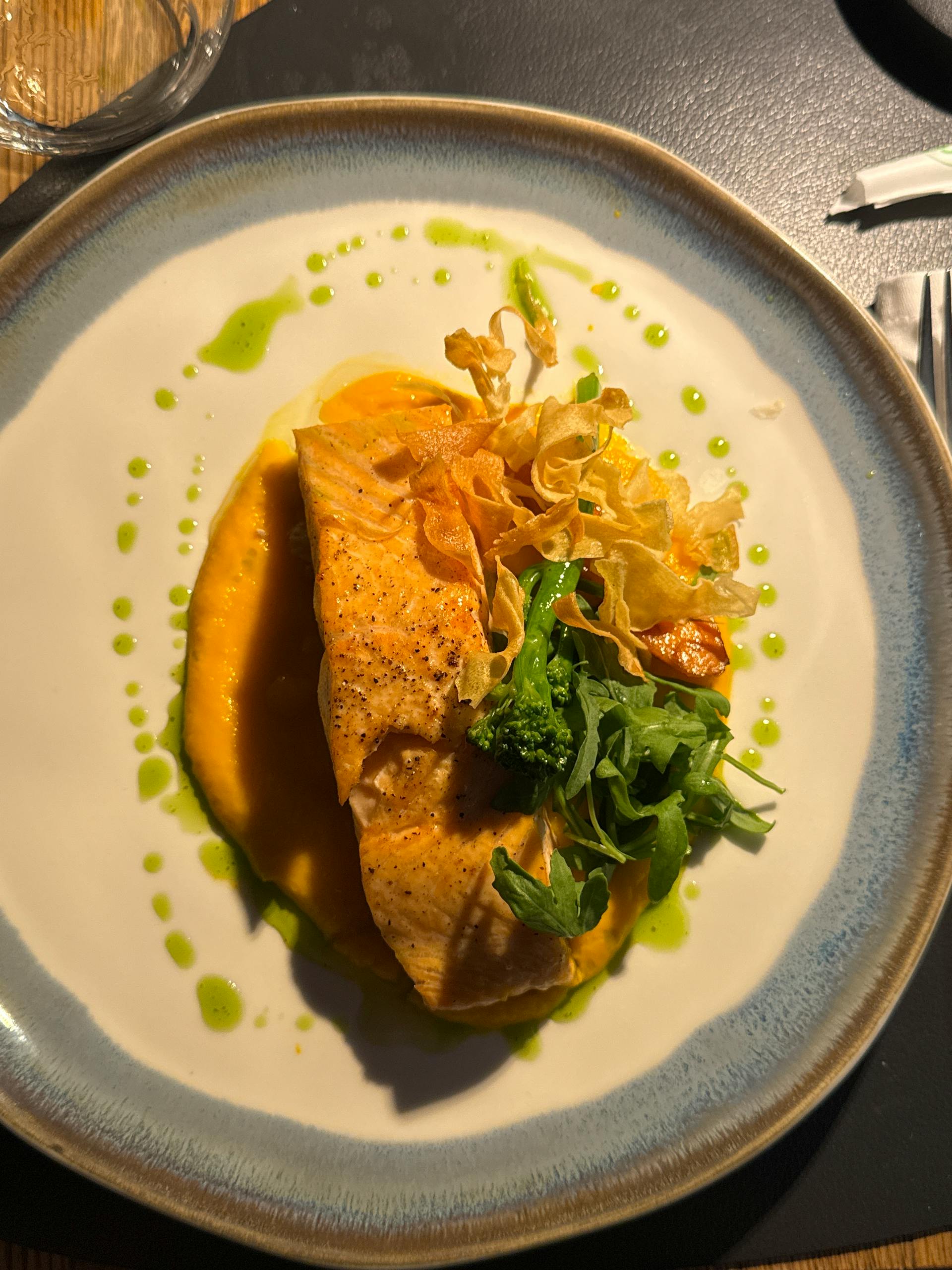
A beautifully plated salmon dinner doesn’t have to mean reservations and a dress code. With one good skillet (or a hot oven), a simple vegetable puree, and a quick herb oil, you can build a restaurant-style plate right at home.
This version is inspired by a composed salmon dish with an orange puree, fresh greens, and bright green oil. Because we’re working from a photo—not a chef’s recipe—I’ll show you flexible options you can tailor to what’s in your kitchen.
Ingredients
For the Salmon
- 4 salmon fillets (about 5–6 ounces each), skin on if possible
- Salt and freshly ground black pepper
- 1–2 tablespoons neutral oil (such as avocado or canola)
- Lemon wedges, for serving (optional)
For the Orange Vegetable Puree (Choose One)
- Carrots: 1 pound carrots, peeled and sliced
- Butternut squash: 3–4 cups peeled, cubed squash
- Sweet potatoes: 2 medium, peeled and cubed
- 1–2 tablespoons olive oil or butter
- Salt to taste
- Warm water or broth, as needed for blending
For the Greens
- 2 handfuls baby arugula or mixed tender greens
- Small broccoli florets or another quick-cooking green vegetable (optional)
- Squeeze of lemon or splash of vinegar
- Pinch of salt
For the Quick Herb Oil
- 1 cup soft fresh herbs (parsley, basil, cilantro, or a mix)
- ½ cup olive oil
- Pinch of salt
How to Make It
1. Make the Puree First
Bring a pot of salted water to a boil. Add your carrots, squash, or sweet potatoes and simmer until completely tender when pierced with a knife.
Drain well. Blend with olive oil or butter and just enough warm water or broth to create a smooth, spoonable puree. Season with salt. Keep warm, or cool and refrigerate for up to 3–4 days.
2. Prep the Salmon for Crisp Skin
Pat the salmon very dry with paper towels—especially the skin. Moisture is the enemy of crispness. Season both sides with salt and pepper.
Heat a heavy skillet over medium-high until hot, then add oil. Place the salmon skin-side down. Press gently with a spatula for the first 10–15 seconds so the skin makes full contact with the pan.
Let it cook mostly on the skin side. You’ll see the color change creep up the sides. This slow rendering helps the skin turn crisp and golden.
3. Flip or Finish in the Oven
Once the skin is crisp and the salmon is about 75–80% cooked, flip and cook another 1–2 minutes on the flesh side or transfer the skillet to a 400°F oven to finish.
For food safety, fish should reach an internal temperature of 145°F, according to the U.S. Food and Drug Administration. An instant-read thermometer inserted into the thickest part makes this easy and takes the guesswork out.
Remove from heat and let rest for a few minutes.
4. Make the Herb Oil
Blend fresh herbs, olive oil, and a pinch of salt until bright green. For a smoother look, strain through a fine sieve. This can be made a day ahead and stored in the refrigerator.
5. Lightly Dress the Greens
Toss arugula or mixed greens with a squeeze of lemon and a pinch of salt. If using broccoli or another vegetable, blanch briefly in boiling water, then drain and pat dry before plating.
6. Plate Like a Pro
Spoon the puree onto each plate and gently smear with the back of a spoon. Place the salmon on top or just alongside. Add a small handful of greens and a few broccoli florets. Drizzle herb oil in small drops or a thin line around the plate.
That contrast—orange puree, pink salmon, bright greens—does most of the visual work for you.
Serving Ideas
- Family-style option: Spread the puree on a large platter and top with several fillets for a shared centerpiece.
- Seasonal swap: Use spring peas for the puree in April and May, or roasted winter squash in colder months.
- Kid-friendly tweak: Serve the puree on the side and let kids dip salmon bites into it.
- Add crunch: A few thin, crisped potato slices or toasted nuts bring texture without much extra work.
Storage Tips
Raw salmon: Store in the coldest part of the refrigerator and use within 1–2 days. Keep it tightly wrapped to prevent cross-contamination. The FDA recommends keeping raw seafood refrigerated at 40°F or below.
Freezing: Wrap salmon tightly in moisture-proof packaging and freeze if you’re not using it within a day or two. For best quality, thaw in the refrigerator—not on the counter. Nutrition.gov also recommends refrigerator thawing as the safest method.
Leftovers: Refrigerate cooked salmon within two hours of cooking. Use within 3–4 days. Reheat gently until it reaches 145°F again, or flake cold into salads or grain bowls.
Puree and herb oil: Store in airtight containers in the refrigerator. Use within 3–4 days. Stir herb oil before serving, as it may separate.
Money-Saving Tip
Frozen salmon fillets are often more affordable and just as practical for this recipe. Because they’re typically frozen soon after processing, quality can be excellent. Thaw them overnight in the refrigerator for best results.
You can also stretch this meal by buying a whole side of salmon, cutting it into portions yourself, and freezing what you don’t need. Pair with whichever orange vegetable is in season and on sale—carrots are usually the most budget-friendly year-round.
With a few smart techniques and attention to safe cooking temperatures, this salmon plate moves from “special occasion” to “Tuesday night.” And once you’ve made it once, you’ll see just how approachable it really is.
