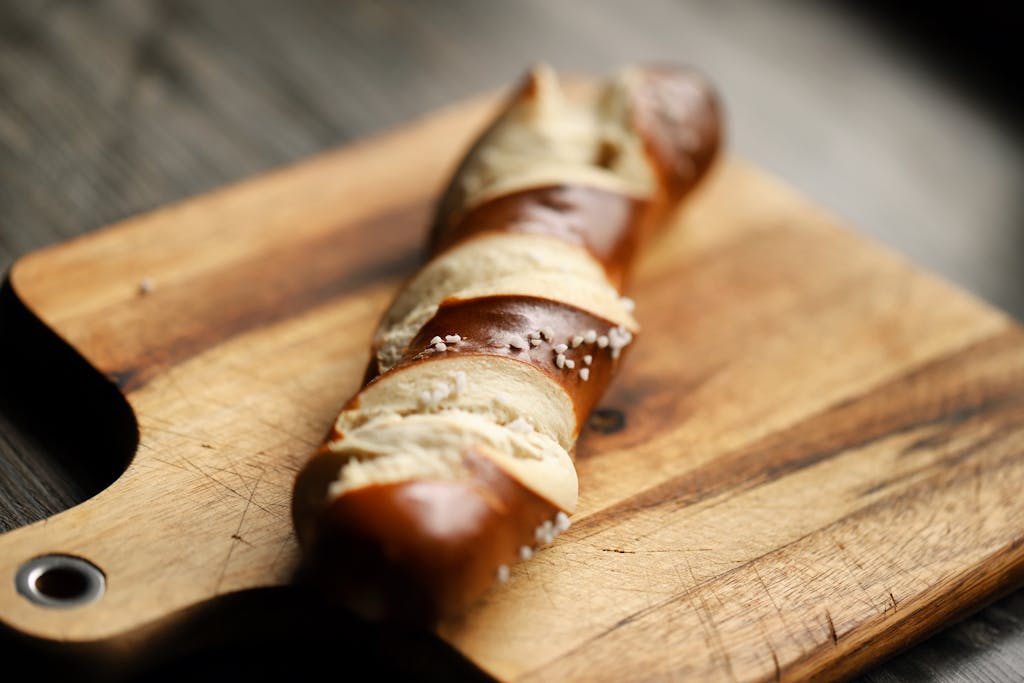
https://cyrusramsey.com/salted-pretzel-bread-loaf-baked-soda-pretzel-style/
Ingredients
Dough
- 3 1/2 cups (420 g) bread flour (plus more for dusting)
- 2 1/4 tsp (7 g) instant yeast
- 1 tbsp granulated sugar
- 2 tsp kosher salt
- 1 cup (240 g) warm water (about 100–110°F / 38–43°C)
- 3 tbsp unsalted butter, melted (or neutral oil)
Baking-soda “alkaline” glaze + topping
- 1/2 cup (120 g) baking soda
- 2 1/2 cups (600 ml) water
- 2–3 tbsp coarse pretzel salt (or flaky sea salt)
- Optional: 1 tbsp brown sugar (for a slightly deeper color)
Optional egg wash (for extra gloss)
- Optional: 1 egg, beaten with 1 tbsp water
Method
Recipe by Heather Schiefelbein.
- Mix the dough. In a large bowl (or stand mixer), whisk bread flour, yeast, sugar, and kosher salt. Add warm water and melted butter. Mix until a shaggy dough forms, then knead 8–10 minutes by hand (or 6–8 minutes with a stand mixer) until smooth and elastic. If the dough feels very sticky, add flour 1 tbsp at a time.
- First proof. Place dough in a lightly greased bowl, cover, and let rise until puffy and increased in volume by about half, 35–45 minutes.
- Shape a loaf. Turn dough onto a lightly floured surface. Gently press out bubbles. Shape into a tight log about 9 inches long. Place seam-side down in a lightly greased 9x5-inch loaf pan (or onto a parchment-lined baking sheet if you prefer a free-form loaf).
- Second proof. Cover and let rise until the dough crests slightly over the rim of the pan (or looks visibly inflated), 30–40 minutes.
- Heat the oven. About 20 minutes into the second proof, preheat oven to 425°F (220°C). Position a rack in the middle.
- Make the baking-soda glaze. In a saucepan, combine baking soda and water (and brown sugar if using). Bring to a gentle simmer, stirring until fully dissolved. Keep at a simmer while the dough finishes proofing. (It’s normal for it to look a little foamy.)
- Glaze and salt. Uncover the loaf. If using egg wash, lightly brush the surface for shine. Carefully spoon the hot baking-soda mixture over the dough (or dip/spray lightly, avoiding over-saturating the pan edges). Sprinkle generously with coarse salt.
- Bake. Bake 35–40 minutes, rotating once halfway through. For doneness: the loaf should be deep golden-brown , sound hollow when tapped underneath, and register about 190–200°F (88–93°C) in the center if you have an instant-read thermometer.
- Cool before slicing. Let cool in the pan for 10 minutes, then turn out onto a rack. Cool at least 45 minutes for cleaner slices and a crust that firms up.
Serving, useful notes and storage
Keep the bread tightly wrapped for the next meal and toast slices as it loses freshness. Choose a batch you can finish before it molds; discard moldy bread.
Crust: dark golden-brown, glossy, and set (not pale or dry). Interior: springs back when gently pressed, with a moist but fully baked crumb.